03 Audiovisual
Producción audiovisual
Imagen y sonido diseñados juntos, no cosidos al final.

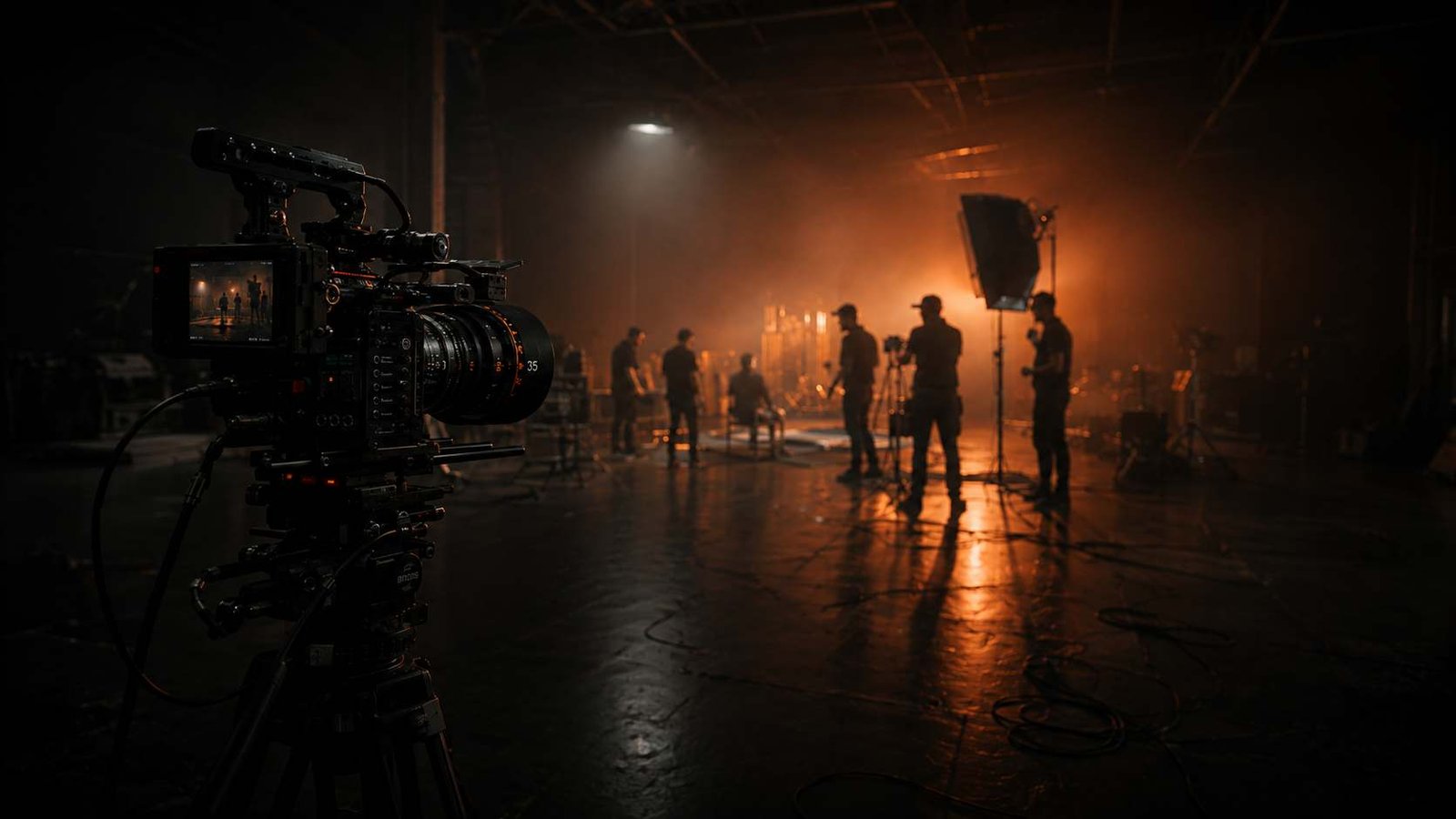
Imagen conceptual de ambiente; no representa una obra o proyecto publicado.
En corto
La producción audiovisual abarca concepto, rodaje o material de archivo, montaje, diseño sonoro, música y entrega. La diferencia de ASRcreative es que la música y el sonido forman parte de la misma decisión de producción que la imagen, lo que elimina el hueco habitual entre un montaje ya cerrado y una banda sonora que hay que encajar a la fuerza.
ASRcreative produce piezas audiovisuales —contenido de marca, piezas de autor, capturas en directo, montajes y reversionados— con la música y el diseño sonoro pensados como parte de la pieza, no añadidos al final.
Resultados
Qué te llevas
- Una pieza que funciona con sonido y que sigue comunicando sin él
- Música y sonido diseñados para el montaje, no licenciados para tapar un hueco
- Versiones y relaciones de aspecto preparadas para los canales que usas de verdad
- Especificaciones de entrega que pasan los controles de plataforma y de emisión
Entregables
- Montaje máster en la especificación de entrega acordada
- Versiones por canal y relaciones de aspecto: 16:9, 9:16, 1:1 y cortes reducidos
- Archivos de subtítulos cuando la pieza los necesita
- Banda sonora original, diseño sonoro y mezcla, o música licenciada cuando sea la mejor vía
- Documentación del proyecto: versiones, uso de la música y especificaciones de entrega
Proceso
Cómo funciona el trabajo
-
01
Objetivo
Qué tiene que conseguir la pieza, para quién y dónde se verá. El formato se decide después de eso, no antes.
-
02
Concepto y tratamiento
Un tratamiento escrito con narrativa, estética, ritmo y el papel que juega el sonido. Se aprueba antes de rodar o montar nada.
-
03
Producción
Rodaje, captura o montaje del material existente, siempre contra el tratamiento aprobado.
-
04
Montaje y sonido
El montaje de imagen avanza junto al diseño sonoro y la música, para que el ritmo de la pieza sea una sola decisión y no dos.
-
05
Versionado
Versiones por canal, duraciones y formatos producidos a partir del máster aprobado.
-
06
Entrega
Archivos entregados en la especificación técnica exigida, con la documentación de lo que incluye cada uno.
En detalle
El sonido es la mitad de la imagen
Casi todo el audiovisual se planifica con la imagen primero y el sonido al final, y por eso hay tanta pieza que suena más alto de lo que se recuerda. Decidir la dirección sonora mientras se escribe el tratamiento cambia el propio montaje: el ritmo, los puntos de corte, dónde el silencio pesa más que la música.
Además sale más barato. La música decidida en la fase de tratamiento se compone o se licencia una vez. La música decidida después de cerrar la imagen se suele pagar dos veces.
El versionado es una decisión de producción, no un apaño
Una pieza que va a existir como película 16:9, como corte vertical 9:16 y como bumper de seis segundos debería encuadrarse y respirar pensando en las tres desde el principio. Recortar en vertical una composición horizontal pierde información siempre.
La lista de versiones se acuerda antes de producir, para que el rodaje o el montaje protejan los encuadres que cada versión necesita.
Qué se documenta al entregar
Cada entrega incluye qué contiene la pieza y de qué depende su uso: qué música lleva y bajo qué base, qué versiones existen y para qué especificación se hizo cada archivo.
Eso es lo que permite que otro equipo la retome dentro de un año sin tener que adivinar.
Antes de escribirnos
Qué necesitamos de ti
- El objetivo y el público al que va dirigida
- Dónde se va a publicar y qué especificaciones exige cada plataforma
- Material existente: metraje, activos de marca, manuales, piezas anteriores
- Duraciones y versiones necesarias
- Limitaciones legales, de derechos o de confidencialidad sobre personas, localizaciones o música
- Fecha límite y puntos de aprobación
No hace falta que lo tengas todo para escribirnos. Lo que puedas contestar hace la respuesta más útil; lo que no, forma parte de lo que resolvemos juntos.
Crear un proyectoPreguntas frecuentes
Preguntas que nos hacen de verdad
¿Cuándo hay que decidir la música en un proyecto audiovisual?
En la fase de tratamiento, no después de cerrar la imagen. Decidir pronto la dirección sonora cambia el propio montaje —el ritmo, los puntos de corte, dónde el silencio pesa más que la música— y evita pagar la música dos veces, que es lo que suele ocurrir cuando hay que encajar una banda sonora en un montaje ya bloqueado.
¿Tengo que decidir las versiones por canal antes de producir?
Sí, si quieres que salgan bien. Una pieza que va a existir como película 16:9, corte vertical 9:16 y bumper de seis segundos necesita encuadrarse y respirar pensando en las tres desde el principio. Recortar en vertical una composición horizontal pierde información siempre.
¿Podéis trabajar con material que ya tenemos grabado?
Sí. Montaje, reversionado, diseño sonoro y banda sonora pueden construirse sobre material existente. Lo importante es conocer su situación de derechos —quién lo grabó, quién aparece y qué uso se acordó— porque eso determina qué se puede entregar legalmente. Si la documentación no existe o está incompleta, lo decimos antes de empezar: es preferible reducir el alcance a entregar una pieza que no se pueda emitir.
¿Por qué la postproducción siempre acaba costando más de lo previsto?
Casi nunca por trabajo nuevo: por el mismo trabajo hecho dos veces. Un plano que se cae o una duración que se ajusta obliga a resincronizar la música, revisar la mezcla, repasar el grafismo y, si el plano estaba etalonado, repetir el color. Las dos medidas que más lo reducen son bloquear el montaje de verdad antes de empezar el acabado y reservar de entrada entre un tercio y la mitad del tiempo de post para cambios no previstos.
¿Qué especificación técnica hay que fijar antes de mezclar?
Contenedor y códec, frecuencia de muestreo, profundidad de bits, canales y nivel de sonoridad, con su límite de pico. El destino —cadena, plataforma o integrador— casi siempre tiene ese documento escrito; pedirlo antes de empezar cuesta un correo y descubrirlo después obliga a rehacer la masterización. El error más común es mezclar mundos: masterizar a 44,1 kHz porque «es música» cuando el montaje de vídeo va a 48.
Siguiente paso
Crear un proyecto
Describe el proyecto y qué tiene que conseguir. Te respondemos por escrito con alcance y siguientes pasos, no con un presupuesto automático.